Apron Wallet: paying without bank bottlenecks
One balance to pay suppliers and staff, without bank delays or chasing approvals.
- Company
- Apron
- Year
- 2025/2026
- Team
- Bill Pay, with Expenses and Platform
My role
Led product design: research, problem definition, solution definition, end-to-end design, and QA
Outcome
- £40m+ paid through Wallet, now about £10m a month
- Grew almost 9x in its first six months
- 200+ companies paying with Wallet
Problem
Businesses and their accountants use Apron to pay suppliers and staff in batches, funded from their bank account. That causes two recurring problems:
- Bank delays and limits. Rejected payments hold up payruns, and bank limits split large payments across days, which makes reconciliation in Xero and QuickBooks harder.
- The owner as a bottleneck. Often only the owner has bank access, so they approve every payment, even small recurring ones.
For Apron, that meant incomplete payments, lost deals, and support and engineering time. Some companies couldn’t adopt Apron until this was solved.
Solution
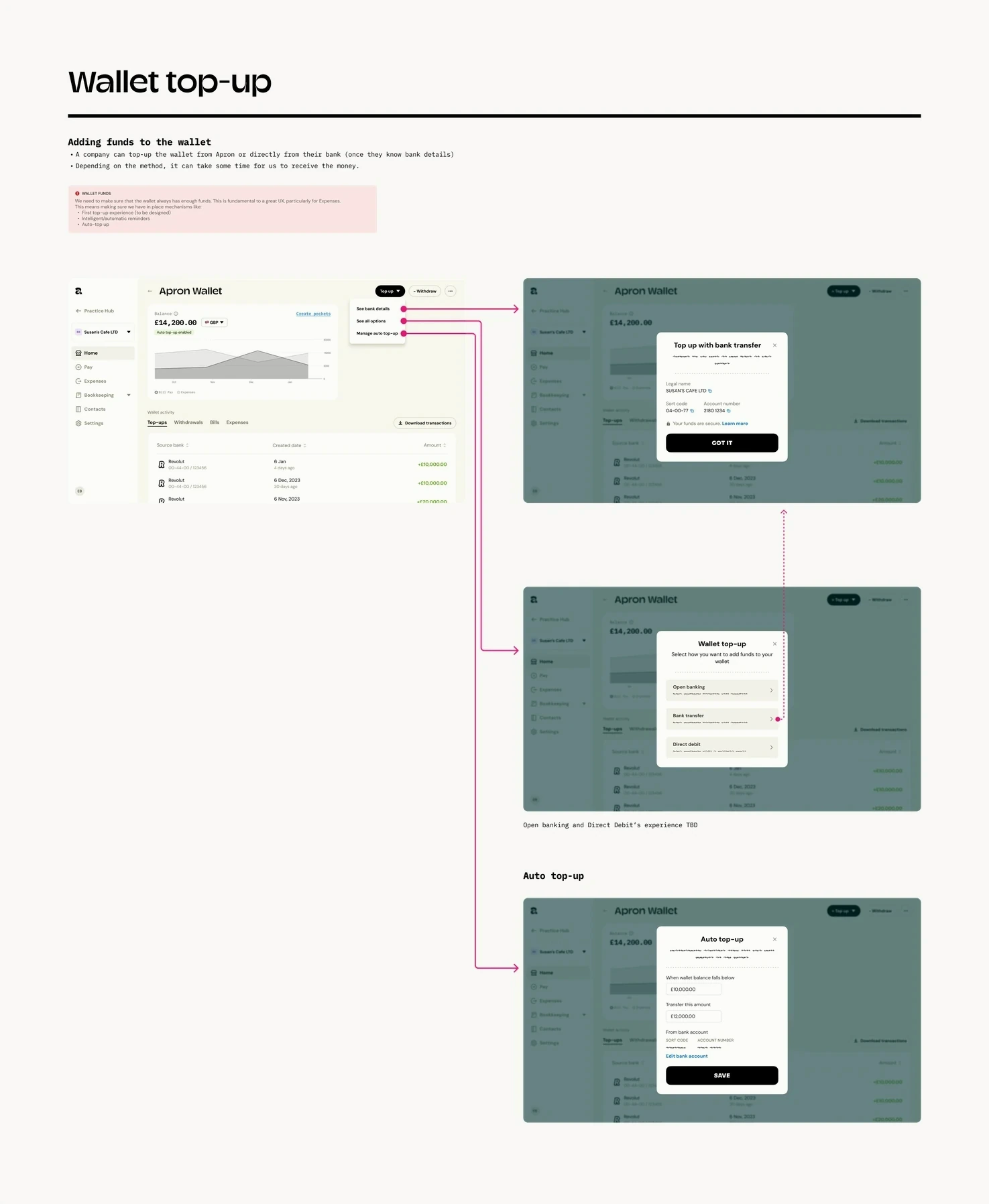
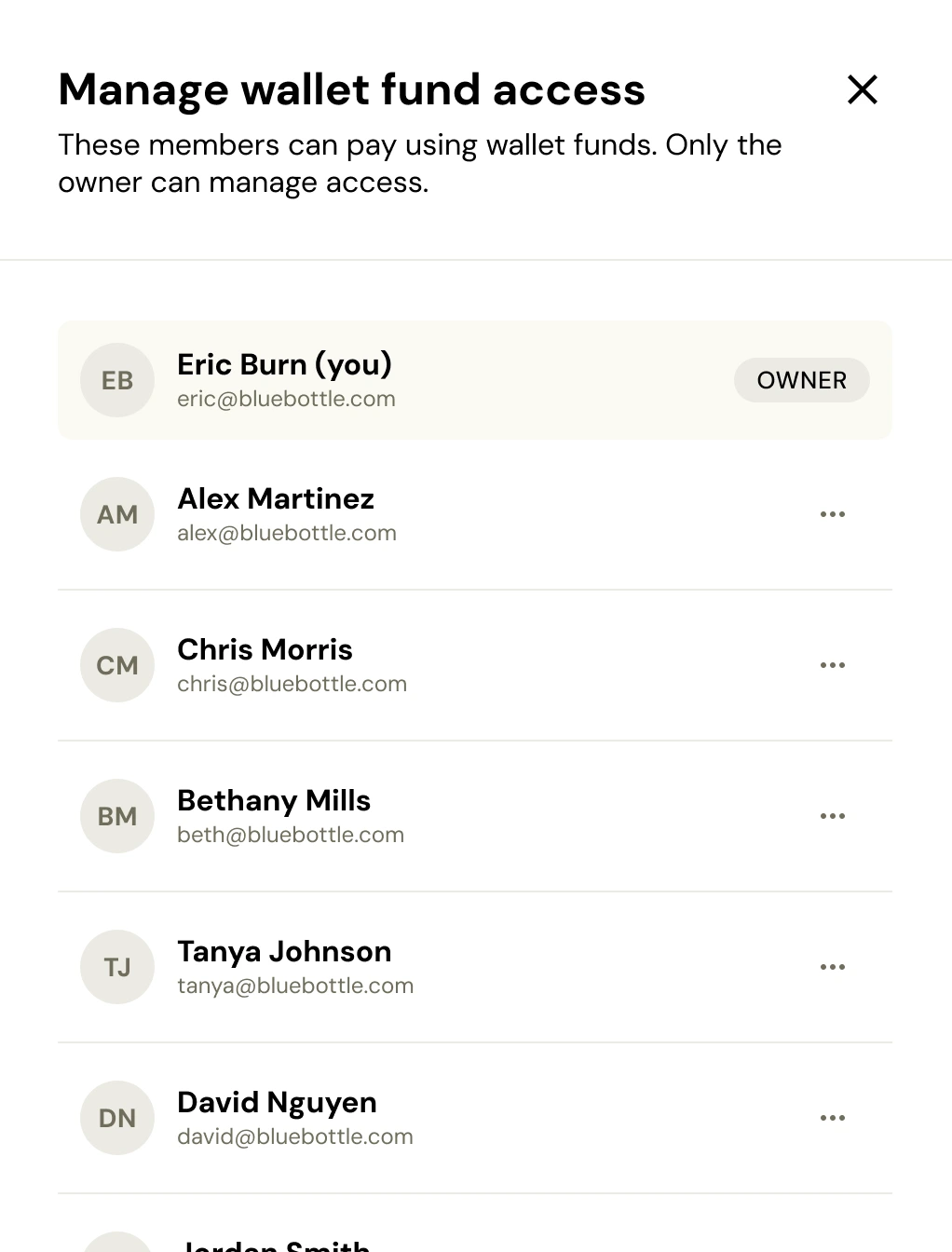
A wallet inside Apron that holds a balance. The owner approves a top-up once, and the team pays from it, with no bank limits. It sits next to bank and card as a payment method, and the same balance funds Expense cards.
Key decisions
Two of these reached beyond Bill Pay: one balance shared with Expense cards, and one MFA solution for all of Apron.
- A wallet, not a smaller fix. Split payruns, CHAPS, and Direct Debit each solved one of the two problems at most. A balance solved both, and opened doors the quick fixes couldn’t: getting paid into the wallet, more revenue, and simpler refunds. The cost was scope: holding money meant new security and permissions.
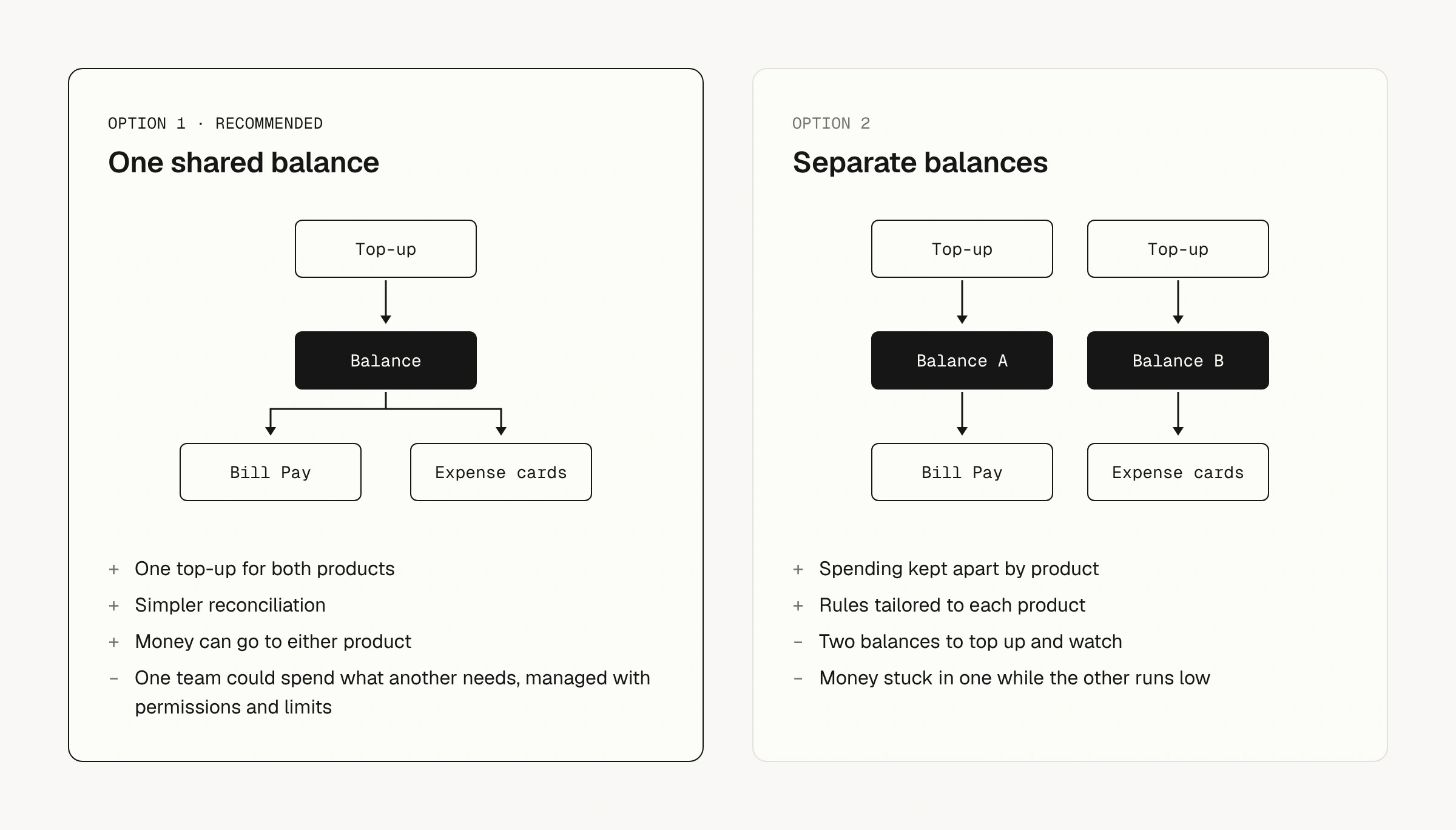
- One balance for Bill Pay and Expense cards. An architectural call, not just a design one. Expense cards had their own funding account, and I recommended one shared balance, as Pleo and Brex do: one top-up, simpler reconciliation, and money that can go to either product. Permissions and limits would stop one team spending what another needs.
- MFA for paying and signing in. To hold money, the law requires strong authentication on payments. Rather than add a separate check just for Wallet payments, I built on the MFA people already used to sign in and designed one experience across Apron’s features, so one setup covers them all. Anyone paying from the wallet must set it up, everyone else can opt in, and admins can make it mandatory.
How I led it
I led product design on Bill Pay, working with a PM and engineers, with the CEO as the main stakeholder.
- Defined the problem and the bet. I ran discovery end to end: research across support conversations, sales calls and competitors, then customer interviews. I turned the findings into a problem statement that made clear the problem for users and the opportunity for Apron, then took the options to the team and the CEO over several product reviews.
- Shaped how money works across Apron. I defined how the balance, money flows, reconciliation, permissions, and pricing fit together, and aligned the Expenses and Platform teams around one shared wallet.
- Unified MFA across Apron. Apron already had two-factor sign-in with an authenticator app. Wallet needed another factor, so I added SMS and designed one MFA experience across the existing and new factors, now used for sensitive actions across the product.
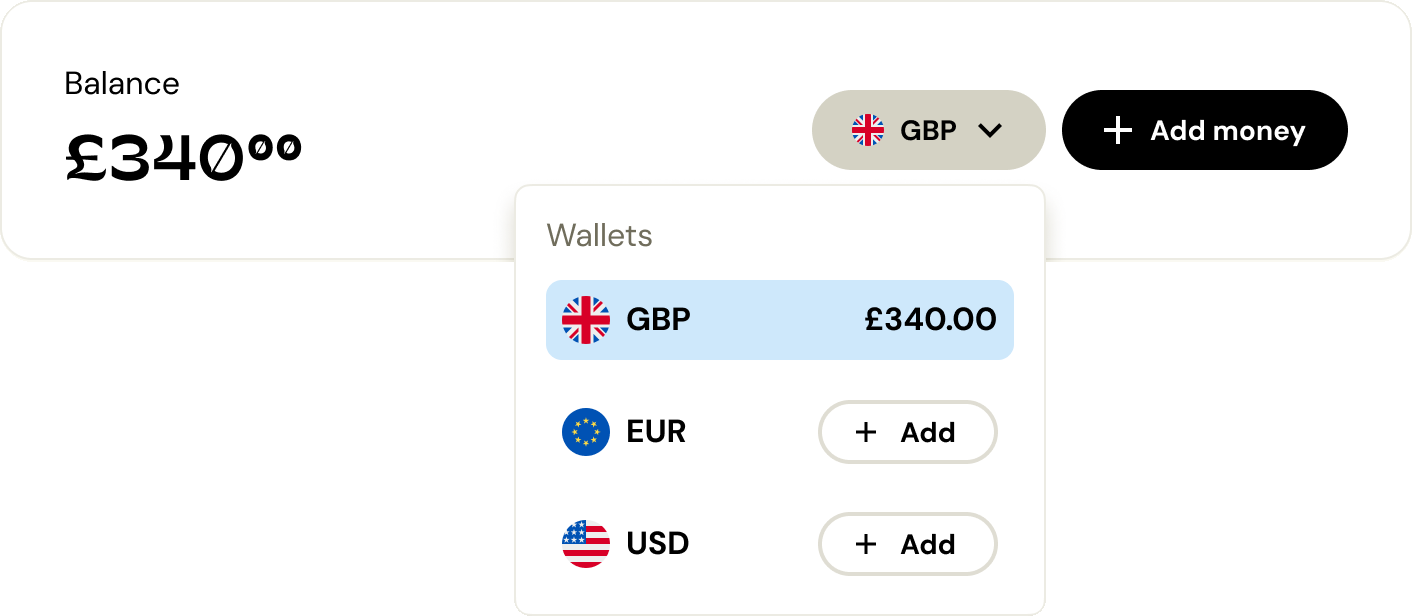
- Carried it to release. I designed every flow, from wallet payments and top-ups to multi-currency and statements, and owned QA through release.
Outcome
After a small beta, Wallet grew almost 9x in its first six months. More than 200 companies use it, and over £40m has been paid through Wallet, now about £10m a month.
It became one of Apron’s main payment methods, with one balance serving supplier payments, payroll and Expense cards. My early concepts kept guiding the work after release, across teams. The Expenses team built auto top-up for cards from them, and it was later reused for Wallet as a whole. Wallet is now also used to return money when a payment runs into a problem, and it has come to the mobile app. MFA now protects sign-in and sensitive actions across Apron.
Reflection
MFA was a legal must for Wallet, and it became a key piece of the work across sign-in, payments and settings. Next time, I’d check regulatory and platform needs with those teams during discovery. What worked was disciplined scoping: the early concepts set a clear direction, so the first release kept the core pieces, the shared wallet and MFA, each as lean as it could be while still making sense to customers.